
Parent training. These are familiar words to parents who have children with autism and other developmental disabilities.
We experience challenging and sometimes scary behaviors especially as our children grow older and stronger and desire independence just like any emerging adult.
Some of us have the good fortune to be able to connect to a behavioral services organization that not only provides one-to-one therapy with our child but also teaches us parents strategies to employ to enable us to live more “normal” lives.
And if we are particularly lucky we will have an insightful and caring behavioral supervisor overseeing our child’s case. Such has been the case with our supervisor for our almost 21 year old son Jeffrey.
Jingmei and has introduced us to the basics of behavior management. Yes, we have learned practices over the last 20 years, but Jingmei does something different. She grounds us in the basics referring back to them regularly. And she provides rich consultation as we aim to ensure our son is safe and happy and focused on development, instead of his trying to gain our attention or access through inappropriate means.
We have been working with Jingmei for about a year now, and it’s only now that I realized the full power what she is doing.
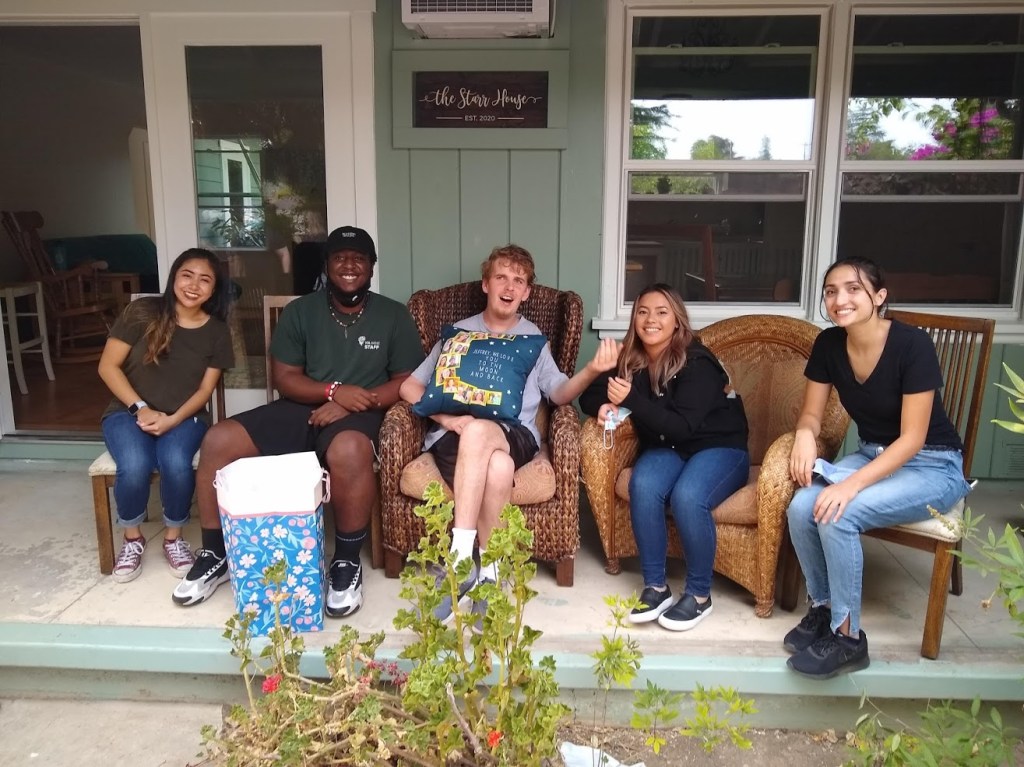
Our son transitioned into an inclusive home that just started up in late August. Once again, good fortune has come our way because Jeffrey’s housemates are well-versed in behavior management. They both were staff members at a special needs camp. Even more significantly than their behavior management skills and experience with the special needs community is the sense of culture that they bring with them.
Definitely a culture of generosity and collaboration are essential. A belief that everyone brings something special to their community is also foundational. Yet I think the element that is the glue to all of this is a learning culture that they and the other caregivers are so comfortable with.
Certainly they want to learn about our son and what works for him. That is only the starting point. What we are all learning together is how to create a safe environment not just for Jeffrey but for the caregivers too. And not just physical safety but also emotional safety. It’s a shift from a mindset of being worried about making “mistakes” to learning by doing and with the help and support of others. It’s real time enabling a caregiver to practice an approach and get support from partner caregivers and an opportunity to debrief and align to ensure consistency.
So we are now just three weeks out and I’m already seeing what are some of the factors that are enabling this growth approach for my son and for the household community he is within.
Start with the anchors of the culture. Two of these are Jeffrey’s marvelous housemates, Jessica and Kaela, who see their own growth opportunity in this experience. They are two young women who have experienced a collaborative learning culture at nearby Via West camp for children and adults with special needs. Then there is also Justine, who spent the last eight months quickly coming up the learning curve to work with Jeffrey back at our home during this transition year. Justine brings her full heart to Jeffrey’s care and it makes all the difference.
Model how a cross-disciplinary team can be facilitated to bring a range of perspectives and gain alignment. In our case that was bringing Jingmei and also Jeffrey’s talented school team (teacher Tehila, behaviorist Jennifer, SLP Shradda and OT Elizabeth) together to meet with the housemates and caregiving agency. Due to social distancing, this was facilitated remotely and we were able to include all of the team.
Entrust the housemates as the learning facilitators to bring their caregiving teams together and communicate to them regularly. Kaela and Jessica are building a remarkable team and bringing in the strengths of each of the caregivers. They are listening to their ideas, especially to those who have had experience with Jeffrey this past year (Justine, Jesse, Bernie and Sam). I am also connecting them to external experienced guides who can provide rich insight and coaching to all. This not only includes the ABA and the teaching team, but also psychiatrist, Dr. Froehlich, and mentor/neurodevelopmental pediatrician, Dr. Parker.
Plant the seed and the expectation that learning is never one and done with human beings. This is why parent training which has morphed into caregiver training happens each month so that the pause-reflect-discuss-adjust-align process can happen regularly.
The magic of team learning all came together on Friday, when Jingmei and Kaela co-facilitated the first monthly caregiver training session for the weekend staff. This was learning in action over Zoom, as Jingmei shared key concepts and Kaela sought inputs from each team member. Together they led the team in problem solving around topics ranging from Jeffrey bolting outside or into the kitchen to play with the microwave buttons to staff maintaining instructional control when Jeffrey is testing it. Jingmei walked the staff through pointers in an excellent article, and Kaela prompted the team with cues like: “I want to hear from you….” or “Is this something as a team you want to start doing?”
I had these reflections earlier this week while on my morning walk. Since I’m capturing the words through voice recognition, what ends up in text is not always what I intend. And sometimes serendipity steps in. These were the words I saw when I went back to reread my reflections: The truest living called learning culture. I love this as my work manager just introduced me to a podcast, Learning is the New Working. For Jeffrey and his team “Learning is the New Living.”
“Letting go” has been a theme of my past blogs and raising Jeffrey. This summer, letting go is more important than ever. Jeffrey’s team will thrive by my giving them space. They have what takes. I know they do, because the truest test is what I see today: Jeffrey thriving and feeling safe and loved in his new home.


Leave a comment